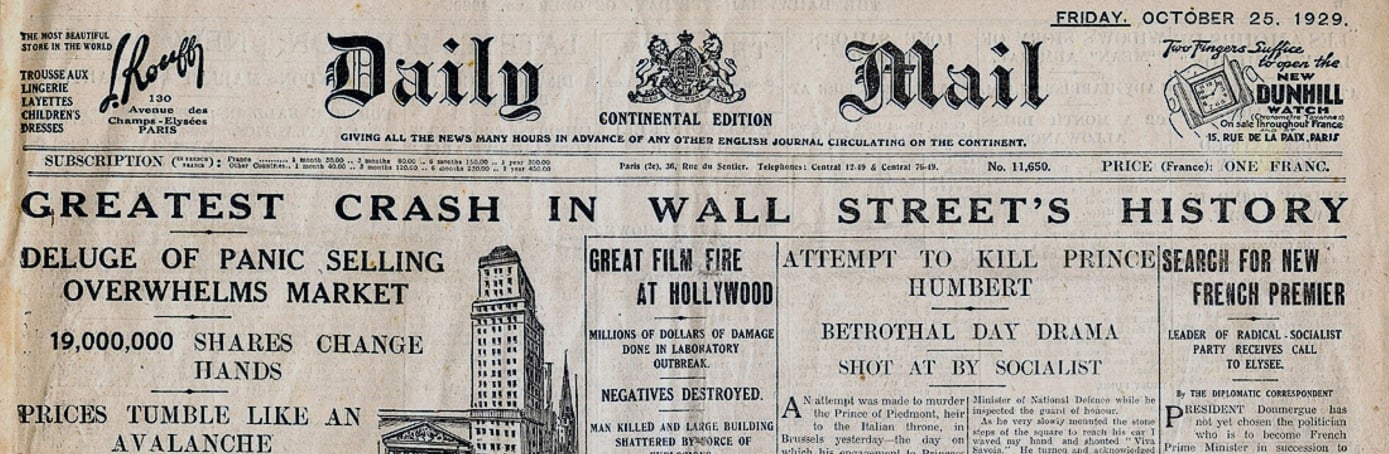
Optimizing Obamacare vs Minimizing Taxes presents a classic trade-off.
On the one hand, it would be nice to maximize Obamacare subsidies. Easy! Simply don’t generate a lot of income.
On the other hand, we want to minimize taxes. We do this by offsetting income with standard deductions and personal exemptions, and generating (a large amount of) income that has preferential tax treatment.
But for the ACA, there is no preferential tax treatment. There is no standard deduction, no personal exemptions.
In this post, I explore how to navigate this complex environment in order to optimize health insurance premiums, out of pocket medical expenses, and taxes. Can we find the balance?
In all likelihood, an early retiree in the United States is going to purchase ACA (Obamacare) compliant Health Insurance on the Federal or a State Health Insurance Marketplace.
Even though the ACA has provided common standards, Health Insurance is still a complex topic with numerous trade-offs. Coverage levels and premiums vary. Every insurance company has a different approach to cost sharing. Each State has a slightly different implementation, maybe a different website, and wildly different prices.
Subsidies may pay nearly all of your premium, or they may cover nothing. It isn’t always clear which will apply until after the fact. As a result, some will get an extra large tax bill at the end of the year, while others will pay too much each month. They may even provide a disincentive to earn a higher income.
But much like the Income Tax, those who understand the the system can optimize their income and investments. Knowledge is power. Optimizing Obamacare starts with understanding the system. Then we can make choices to minimize costs and maximize coverage.
Only 40 More Years of Working For That Bling Bling (photo credit – Achim Voss)
For somebody who has committed to building wealth through living well below their means and investing, how long will it take to become financially independent?
The stock market is a volatile and uncooperative beast, so our assumption of constant growth never materializes. How do real world investment returns impact our wealth accumulation?
Despite the data, not everybody is comfortable with a 4% withdrawal rate. Some require a 3% withdrawal rate, or even (gasp!) 2%. How much longer will it take to save 33x or 50x our annual spending?
To answer these questions, I used the same methodology as the Trinity Study… but this time, looking backwards.
“How long would it have taken to become financially independent throughout modern history?”
… today’s post is hot off the presses from our hotel room in Osaka, Japan, thanks to an unexpected surge in blog traffic. Warning: contains a healthy dose of sarcasm…
On a hot and steamy summer day 41 years ago, a young woman gave birth to a strikingly handsome and moderately intelligent baby boy. (That was me :P ) My Mother was 16 years old. High school is a luxury that few single mothers can afford.
A few years later my Mom got her GED, finished night school for nursing, and got married. 3 more beautiful and intelligent children followed. That is a lot of mouths to feed when the economy is down and it is hard to find work. I remember my teacher calling the class one-by-one to the front of the room so she could fill out a survey on parental employment. I barely managed to mutter “unemployed” from under my breath.
While I was doing my walk of shame, my future wife was watching her parents’ marriage fall apart. Divorce in 1980s Taiwan was much like divorce in 1950s America, and the burden fell heavy on women and children. Winnie would spend the next 2 1/2 years living in an orphanage while her Mom worked to get their life put back together. To this day, nobody knows where her father disappeared to.
Fast forward to high school graduation. Nobody in my extended family had been to college, but it seemed the ticket to a better life. I graduated 4 years later with ~$40k in debt. The second half of my Senior year I used credit cards to buy ramen. Adjusted for inflation and interest rates (my loans were 7-8%), in 2015 I would be in the top 5% of all graduates for debt burden.
What does childhood on the edge of poverty and burdensome student loans have to do with anything? If two kids with the odds stacked against them were able to overcome life’s challenges, then most anybody can.
Some people thrive on jumping out of airplanes, climbing untamed mountains, or riding wild rapids. These same activities would stop the heart of many an avid Scrabble player and crochet aficionado. Perception of risk varies widely… as every extreme sports fan knows, more than one person has died with knitting needles in hand.
This same risk spectrum exists in finance. Even the words we use belie our assumptions. Someone whose preferred method of saving for retirement is to hoard cash under their mattress may be labeled as “conservative”, whereas an investor with 100% of their assets in equities might be called “aggressive.”
These word choices are unfortunate. Obviously if I don’t enjoy jumping out of airplanes into the rapids of a high mountain river in a kayak, then I must be conservative… I wonder how many investors have been led astray by nomenclature.
This is all vary strange, because I enjoy jumping out of airplanes and riding wild rapids. But when it comes to our retirement I’m extremely risk averse.
I’m not alone. Nobody wants to be destitute in their old age, so like bad television news we focus on the negative, the failures, the worst case.
“Is the 4% Rule unsafe?” “What does safe mean anyway?” “Should I work One… More… Year…?” “Should I go for a 3% withdrawal rate?” “Do all of the very vocal & very risk averse people in some online early retirement forums know something I don’t?”
Probably not.
Instead of focusing on all of the potential failures, just for fun let’s look at what happens when everything goes right. What would have happened if we had retired in 1982?
I wanted to throw up. My body flashed hot and cold, and I could feel the blood thumping in my temples like giant drums. My thoughts raced like wild fire, a tempest out of control.
I kept thinking about what I could do with the $1,000 I had just lost in the stock market. I could have paid down more of my student loans. I could be that much closer to eliminating the PMI on my mortgage. I could just have it in my bank account as an emergency fund.
It would take me weeks of work to regain that money after taxes and normal cost of living. What was I thinking putting my money in something risky like stocks? Stupid, stupid, stupid!





 player and crochet aficionado. Perception of risk varies widely… as every extreme sports fan knows, more than one person has died with knitting needles in hand.